

What if the company name you’ve chosen is already unavailable? For Singapore company registration, the first step is to check the proposed name through ACRA’s Bizfile system. Once approved, a company name is reserved for 120 days, giving you time to proceed with incorporation.
Choosing a name is only one part of setting up a company in Singapore. You also need to decide on a business structure and plan ownership. This guide explains how ACRA name availability works, outlines the main structure options, and covers director, shareholder and company secretary requirements. It gives you a clearer picture of what to prepare before incorporation.
Key Takeaways
- Use ACRA’s Bizfile name application process to assess whether your proposed company name can be used.
- Choose a business structure based on your ownership plans, operational needs and compliance responsibilities.
- Plan for the required director, shareholder and company secretary appointments as part of incorporation.
- Understand how tax and ongoing compliance obligations may shape your setup, and where professional support can help.
How can a professional check whether a company name is available with ACRA?
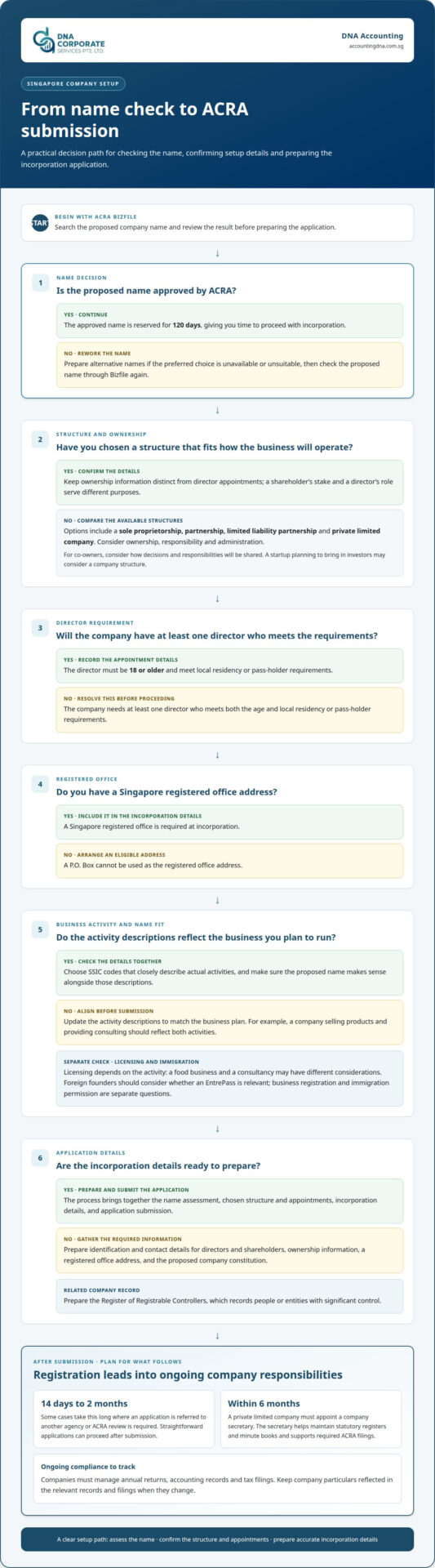
A professional searches the proposed name through ACRA’s Bizfile system. They review the result before preparing an application. An approved name is reserved for 120 days, allowing time to proceed with incorporation.
They also confirm two setup essentials. A Singapore company needs at least one director aged 18 or older who meets local residency or pass-holder requirements. It also needs a Singapore registered office at incorporation. A P.O. Box cannot serve as that address.
What documents are needed to register a Singapore company? Prepare identification and contact details for directors and shareholders, ownership information, a registered office address, and the company’s proposed constitution. These details are used to prepare the ACRA application.
What are the steps a professional takes to register a company with ACRA in Singapore? The process includes assessing the name through Bizfile, confirming the structure and appointments, gathering incorporation details, and submitting the application. Related records are also prepared, including the Register of Registrable Controllers, which records people or entities with significant control.
How long does Singapore company registration take? Straightforward applications can proceed after submission, while referrals to another agency or ACRA review can extend the process. Some cases take 14 days to 2 months.
What are the annual filing, accounting, and tax obligations for Singapore companies? Companies must manage annual returns, accounting records, and tax filings. The applicable filing work depends on the company’s activities and tax position, so a compliance calendar helps directors plan.
Singapore’s corporate income tax rate is 17%, according to the Inland Revenue Authority of Singapore. A business must register for GST if taxable turnover exceeded SGD 1 million in the past 12 months or is expected to exceed that amount in the next 12 months, according to the Inland Revenue Authority of Singapore.
What are the risks and penalties for noncompliance with Singapore company regulations? ACRA may impose composition fines or issue court summonses for defaults under the Companies’ Act. Practical business registration and compliance guides help directors track filings, tax work, and company records.
Choosing a business structure
Your structure affects ownership, administration, and future decisions. A professional matches it to your plans, business activity, and immigration considerations.
Business Entity Types
Singapore business structures include sole proprietorships, partnerships, limited liability partnerships, and private limited companies. They differ in ownership, responsibility, and administration. If you expect co-owners, consider how decisions and responsibilities will be shared. A startup planning to bring in investors may consider a company structure. Choose based on how the business will operate, not just its name.
Applying for a business entity name with professional support
A professional checks the proposed name through ACRA Bizfile and prepares the application using the entity details supplied. They can help refine alternatives if the preferred name is unavailable or unsuitable. Before submission, they align the name with the chosen structure and planned activity. This keeps the name application connected to the wider setup, rather than treating it as a standalone task.
Business licensing depends on the activity. A food business and a consultancy, for example, may face different licensing considerations. A professional identifies the relevant government requirements from the proposed operations. Foreign founders should also consider whether an EntrePass is relevant to their plans. Business registration and immigration permission are separate questions.
ACRA business information products can help clarify an entity’s recorded details. Relevant information can be used when assessing a business setup or reviewing existing records. The appropriate product depends on the question, such as verifying registered particulars or understanding an entity’s profile.
For help assessing the structure and its setup implications, discuss your business plans.
Director, shareholder and company secretary requirements
For registration, the company’s records need to identify its shareholders, directors, and proposed business activities. Keep ownership information separate from appointments: a shareholder’s stake and a director’s role are distinct entries with different purposes.
What are the requirements to register a company in Singapore? A professional prepares the incorporation particulars, including the people involved, ownership details, and business activity. The information should match the decisions made about the company’s structure and intended operations.
Choose SSIC codes that closely describe the company’s actual activities. For example, a company selling products and providing consulting should make sure its activity descriptions reflect both lines of work. A professional can align the codes with the business plan and flag mismatches before submission. For businesses managing cross-border trade or overseas product shipping, trade compliance specialists like global-4pl.com provide importer and exporter of record support.
What are Singapore company name approval rules and restrictions? ACRA reviews the proposed name before it can be used for incorporation. Prepare alternative names in case your preferred choice is unavailable or does not meet ACRA’s approval requirements. The name and SSIC descriptions should also make sense together.
A private limited company must appoint a company secretary within 6 months of incorporation. The secretary helps maintain statutory registers and minute books and supports required ACRA filings. Changes to company particulars should also be reflected in the relevant records and filings.
How much does it cost to incorporate a company in Singapore? The total depends on the structure, ownership arrangements, and professional support required; the applicable price is provided after a quote request.
For help coordinating incorporation records and appointments, discuss your registration requirements.
DNA Accounting
DNA Accounting can help turn incorporation decisions into a practical compliance plan. Whether you are preparing to register or have recently incorporated, support can help organize company records, reporting, and ongoing obligations.
DNA Accounting’s Corporate Secretarial Services support company administration, while Accounting & Bookkeeping helps organize financial records. GST Services and Taxation Services can also support relevant filing responsibilities as your business operates and grows. The right support depends on your company’s structure, activities, and reporting needs.
For guidance on your next step, contact DNA Accounting.
Take the next step with confidence
Your incorporation decisions shape how your business operates after launch. Plan early for systems that keep financial records organized and help you manage reporting as the company grows. A clear plan for Singapore company registration should include the work that follows incorporation.
DNA Accounting offers Accounting & Bookkeeping, GST Services, and Taxation Services to support these ongoing responsibilities. This support can help as your business begins trading, reviews its GST position, or prepares tax information. Choose assistance that fits your company’s activities and needs.
Start a conversation about your requirements and next steps. Contact DNA Accounting about your registration, and move ahead with a practical plan for your business.
Frequently Asked Questions
What is ACRA used for?
ACRA regulates business registration and corporate records in Singapore. Its Bizfile system handles transactions such as lodging company changes, and its records can be used to check an entity’s registered particulars when preparing a contract or reviewing a business relationship. Keep submitted information consistent across company records and supporting business documents.
Can a foreigner register and own a company in Singapore?
Yes. A foreign founder can own all the shares in a Singapore company without a local shareholder. Ownership does not by itself meet every incorporation requirement, so plan the company’s appointments and operating arrangements separately. A founder based overseas should consider how local company administration will be handled alongside their ownership role.
Does a Singapore company need a local resident director and company secretary?
Yes. These are separate roles, so plan for both rather than treating one appointment as a substitute for the other. The director is part of the company’s governance, while the secretary supports statutory administration and records. A company must appoint a corporate secretary within six months of incorporation. For an overseas founder, planning how these responsibilities will be covered helps avoid gaps in administration.
What are the differences between a Singapore private limited company, sole proprietorship, and LLP?
The practical differences concern how the business is organized and how people participate in it. A sole proprietorship suits a single-owner setup; an LLP is organized around partners; a private limited company uses shares and directors. Consider whether you expect to add co-founders, divide ownership, or formalize management as the business develops.
How much does it cost to incorporate a company in Singapore?
Total costs can vary with the structure, ownership arrangements, and professional support required.
Disclaimer
The information provided on this website is for general informational purposes only and is not intended to constitute professional accounting, tax, legal, or financial advice. While we strive to ensure that the content is accurate and up to date, regulations in Singapore, including those administered by ACRA, IRAS, CPF Board, and MOM, may change from time to time and may differ depending on individual circumstances.
Readers should not act or rely on any information contained on this website without seeking specific advice from a qualified professional based on their individual situation.
DNA Corporate Services and its affiliates accept no responsibility or liability for any loss or damage arising from reliance on the information provided in this website or any linked materials.
For tailored advice relating to accounting, taxation, corporate secretarial, or compliance matters in Singapore, please contact us directly for professional consultation.



