

Did you know that as of April 2026, failing to meet your director’s duties during a company closure can lead to a personal fine of up to $20,000? Many SME directors assume they can simply walk away, but choosing between winding up vs striking off is a critical decision that dictates your legal safety for the next six years. If your business is dormant and debt-free, striking off is usually the most cost-effective path. However, if there are remaining assets or complex liabilities, a formal winding up is the only way to ensure a truly clean break from the entity.
It’s completely natural to feel overwhelmed by the maze of ACRA and IRAS requirements. You want to minimize professional fees without the constant worry that a forgotten filing might trigger a penalty or leave you personally liable for old debts. We understand that closing a chapter in your business journey should be a relief, not a source of stress. This guide clarifies the critical differences between these exit strategies, including the updated Simplified Insolvency Programme (SIP 2.0) rules. You’ll discover exactly how to stay compliant, settle with the authorities, and choose the most efficient route to close your Singapore company for good.
Key Takeaways
- Learn why striking off is the fastest, most affordable route for dormant companies with no outstanding assets or liabilities.
- Understand the strategic benefits of formal winding up to provide a permanent legal shield against future creditor claims.
- Navigate the critical choice of winding up vs striking off based on your company’s solvency and the complexity of its remaining obligations.
- Identify how to clear all IRAS and CPF hurdles to ensure ACRA approves your application without costly objections.
- Protect your personal reputation by managing the six-year restoration window effectively to avoid unexpected legal resurrections.
Winding Up vs Striking Off: Defining Your Exit Path in Singapore
Closing a company in Singapore is often a bittersweet milestone. Whether you’re moving on to a new venture or retiring, the technicalities of the Singapore Companies Act shouldn’t add to your stress. Choosing between winding up vs striking off is the first major hurdle you’ll face. Both paths lead to the same destination, the legal dissolution of your business entity, but the level of protection they offer your personal reputation and assets differs significantly. You aren’t just filing forms; you’re securing your professional legacy and ensuring you don’t leave any loose ends that could haunt you years later.
ACRA and IRAS act as the primary gatekeepers in this process. They ensure that all tax liabilities are settled and that no creditors are left in the dark. While striking off is an administrative shortcut, winding up is a comprehensive legal procedure. Understanding which one fits your current situation is the best way to avoid late filing penalties or the risk of being “brought back to life” by a court order later. Our team at DNA Accounting often helps directors navigate these waters, ensuring that the transition is as smooth and stress-free as possible.
What is Striking Off? (The “Dormant” Route)
Striking off is essentially a summary process designed for small, inactive companies. To qualify, your company must be “dormant,” meaning it has completely ceased all trading activities and has no outstanding assets or liabilities. This is the preferred choice for many Singapore SMEs because it’s significantly faster and more cost-effective. However, it requires absolute transparency. If ACRA or IRAS finds undisclosed debts or outstanding tax returns, they will object to the application immediately. If you need help preparing your final accounts for this process, our bookkeeping and accounting services can ensure your records are pristine before submission.
What is Winding Up? (The “Liquidation” Route)
Winding up, or Liquidation, is a formal and rigorous process. It involves appointing a liquidator to realize the company’s assets and distribute them to creditors or shareholders. If your company is solvent, you might opt for a Members’ Voluntary Winding Up. If it’s insolvent, a Creditors’ Voluntary Winding Up is required. This route provides a much stronger legal shield, as the liquidator’s role is to settle all affairs definitively. It’s the necessary path when your business has remaining staff, complex assets, or ongoing debts that need a structured resolution.
Key Differences: Cost, Timeline, and Compliance Requirements
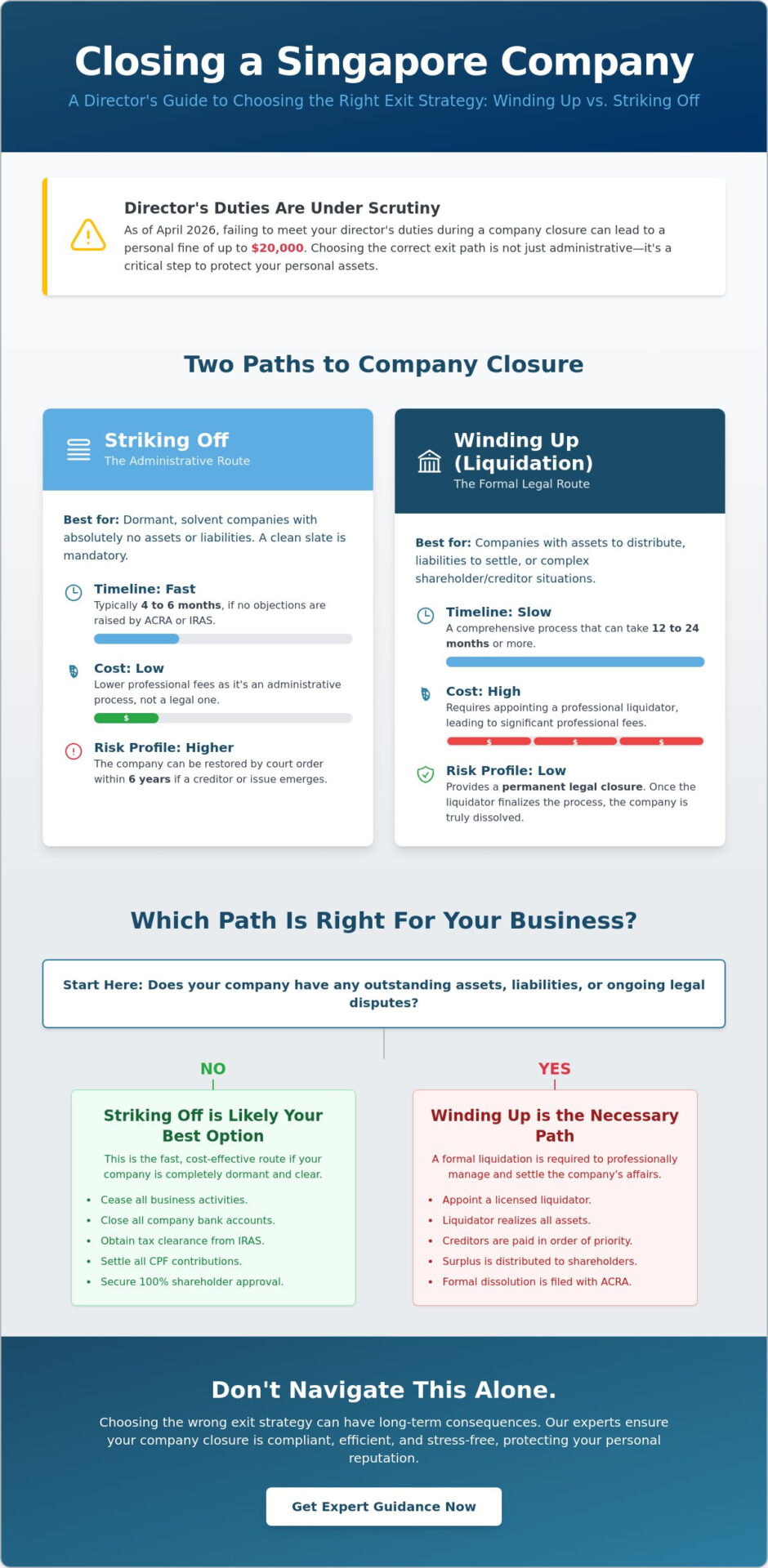
When you decide to close your business, the choice between winding up vs striking off usually comes down to your company’s financial health and how quickly you want to move on. Striking off is an administrative sprint, typically taking about 4 to 6 months if no objections are lodged by creditors or IRAS. In contrast, winding up is a marathon that can last anywhere from 12 to 24 months. Because winding up involves more rigorous legal steps, it naturally incurs higher professional fees, especially since you must appoint a liquidator to manage the dissolution. If you’re unsure where to start, our corporate secretarial services can help you prepare the necessary board resolutions to kickstart whichever path you choose.
The level of scrutiny also differs significantly. Under the 2026 regulations, directors face a maximum penalty of $20,000 for breaches of duty, making it vital to choose the right exit strategy. While striking off relies on your declaration that the company is debt-free, winding up subjects the company’s books to a professional third party. If you’re feeling pressured by the complexity of these requirements, reach out to our team for a chat to clarify your next steps.
Procedural Complexity and the Role of the Liquidator
Striking off is often viewed as a “DIY” route for dormant companies, but winding up requires mandatory professional oversight. A liquidator is a licensed insolvency practitioner appointed to wind up company affairs. Once appointed, they take over the powers of the directors to ensure all formal insolvency procedures are followed correctly. This shift in control protects you by ensuring that the distribution of assets is handled by an independent expert, reducing your risk of personal liability.
Asset Realisation vs. Zero Liabilities
To qualify for striking off, your company must have a “clean slate.” This means no active bank accounts, no outstanding debts, and no remaining assets. Winding up is more flexible in this regard; it allows for an orderly sale of assets to pay off remaining creditors. This is particularly useful if your company still holds property or intellectual property that needs to be liquidated. For a more detailed breakdown of the steps involved, you can refer to our guide on how to close a company in Singapore.
Strategic Decision-Making: Which Route Fits Your Business Reality?
Choosing between winding up vs striking off isn’t just about the immediate cost or timeline. It’s about how much “ghost potential” you’re willing to live with. Striking off is a convenient privilege for the compliant, but it carries the “Aggrieved Party” risk. Under Section 344 of the Companies Act, a creditor or interested party can apply to the court to restore a struck-off company to the register at any time within 6 years of its dissolution. If you have any doubt about potential claims or unfinalized contracts, contact DNA Accounting for a personalized assessment of your risk profile.
In contrast, a formal winding up offers a much more “final” legal shield. Because a liquidator must publicly advertise for claims, creditors have a specific window to come forward. Once the process is complete, it’s significantly harder for the company to be “brought back to life.” A common mistake we see involves directors attempting to strike off a company while it still has outstanding tax obligations. IRAS is highly vigilant; they will lodge an objection to your application if even one tax return is missing or one dollar is owed. This often leads to unnecessary delays and added stress during what should be your final exit.
The 6-Year Reinstatement Risk and Director Liabilities
If a court restores your company, it’s treated as if the striking off never happened. This means your duties as a director are retroactively reinstated, and you could be held liable for actions taken or omitted during that period. This is particularly dangerous if the company was restored to face a lawsuit or a tax audit. We advise all directors to maintain their records for at least five years after the company name is removed from the register. Striking off does not absolve you of liabilities if the company is restored to the register by an aggrieved party.
Why Professional Guidance Prevents Costly ACRA Penalties
Navigating the transition from an active business to a dormant entity requires precision. Our team at DNA Accounting manages this entire lifecycle, ensuring your final tax clearance from IRAS is secured before we ever touch an ACRA filing. This proactive approach prevents the $300 to $600 late filing penalties that often surprise directors during the closure process. For a deeper look at staying on the right side of the law, see our Master Guide to Statutory Compliance in Singapore.
Secure Your Professional Legacy with a Compliant Exit
Closing a business is a significant milestone that deserves a clean, legally sound ending. By now, you should have a clearer understanding of winding up vs striking off and which path aligns with your company’s current financial state. Remember that striking off is a convenient shortcut for truly dormant entities, while winding up serves as a robust defense for businesses with remaining assets or complex liabilities. Avoiding the 6-year reinstatement risk starts with meticulous final accounts and absolute transparency with the authorities.
Founded in 2016, DNA Accounting has deep experience helping Singapore SMEs and startups navigate the complexities of ACRA and IRAS compliance. We provide bespoke care for every client, ensuring that your exit strategy is both cost-effective and fully aligned with the latest 2026 regulatory standards. Don’t let the fear of personal liability or filing penalties stall your next chapter. We’re ready to guide you through the process with the expertise and empathy you deserve.
Let DNA Accounting handle your company closure with zero stress—Contact us today. You’ve worked hard to build your business; we’re here to help you close it with the same level of professionalism and care.
Frequently Asked Questions
Can I strike off my company if it still owes money to the bank?
No, you cannot strike off a company that has outstanding liabilities, including bank loans or credit lines. ACRA requires directors to declare that the company has no assets or debts before the application is approved. When weighing winding up vs striking off, remember that banks are active creditors who will likely lodge an objection if they’re still owed money, leading to an immediate rejection of your application.
How long does the striking off process take in Singapore in 2026?
The striking off process typically takes between 4 and 6 months from the date of your initial application via BizFile+. This timeline includes a mandatory period for the public to lodge objections after your intent to strike off is published in the Government Gazette. If IRAS or any creditors raise concerns, the process will pause until you resolve the underlying compliance or debt issues.
What happens to the company’s bank account after striking off?
You must close all company bank accounts before submitting your application to ACRA. If an account remains open after the company is dissolved, any remaining credit balance is transferred to the Insolvency and Public Trustee’s Office as “bona vacantia.” Reclaiming these funds is a difficult legal hurdle, so it’s much safer to ensure your accounts are at zero and officially closed early in the process.
Is a liquidator always required for winding up a company?
Yes, a formal winding up always requires the appointment of a liquidator to manage the company’s affairs and distribute assets. As of 2026, the permanent Simplified Insolvency Programme (SIP 2.0) provides a faster route for micro and small companies with liabilities under $2 million. While this programme is more efficient, it still requires a qualified professional to ensure the process meets all legal requirements under the Insolvency, Restructuring and Dissolution Act.
Disclaimer
The information provided on this website is for general informational purposes only and is not intended to constitute professional accounting, tax, legal, or financial advice. While we strive to ensure that the content is accurate and up to date, regulations in Singapore, including those administered by ACRA, IRAS, CPF Board, and MOM, may change from time to time and may differ depending on individual circumstances.
Readers should not act or rely on any information contained on this website without seeking specific advice from a qualified professional based on their individual situation.
DNA Corporate Services and its affiliates accept no responsibility or liability for any loss or damage arising from reliance on the information provided in this website or any linked materials.
For tailored advice relating to accounting, taxation, corporate secretarial, or compliance matters in Singapore, please contact us directly for professional consultation.



