

A ledger can balance while cash flow still feels unpredictable. In Singapore, accounting services can bring bookkeeping, general ledger maintenance, accounts payable and accounts receivable into one clear financial picture. Companies must retain business transaction records for at least 5 years from the relevant Year of Assessment, according to the Inland Revenue Authority of Singapore (IRAS).
It’s understandable to think bookkeeping simply means recording transactions, but reliable accounts also show directors what the company owes, what customers still need to pay and how these movements affect cash flow. This guide explains how 新加坡会计服务 can support day-to-day records and payments, what to consider when choosing an accounting partner, and how the right support can help a startup or SME in Singapore as it grows.
Key Takeaways
- Use bookkeeping and a general ledger to give transactions a clear place and make payables and receivables easier to track.
- Choose an accounting partner whose support fits your company’s transaction volume, reporting needs and Singapore compliance responsibilities.
- Keep source documents and accounting records organised so they can support the company’s financial records and statutory obligations.
- Learn how bookkeeping, GST and tax support can work together to give directors a clearer view of their business finances.
Bookkeeping and general ledger services
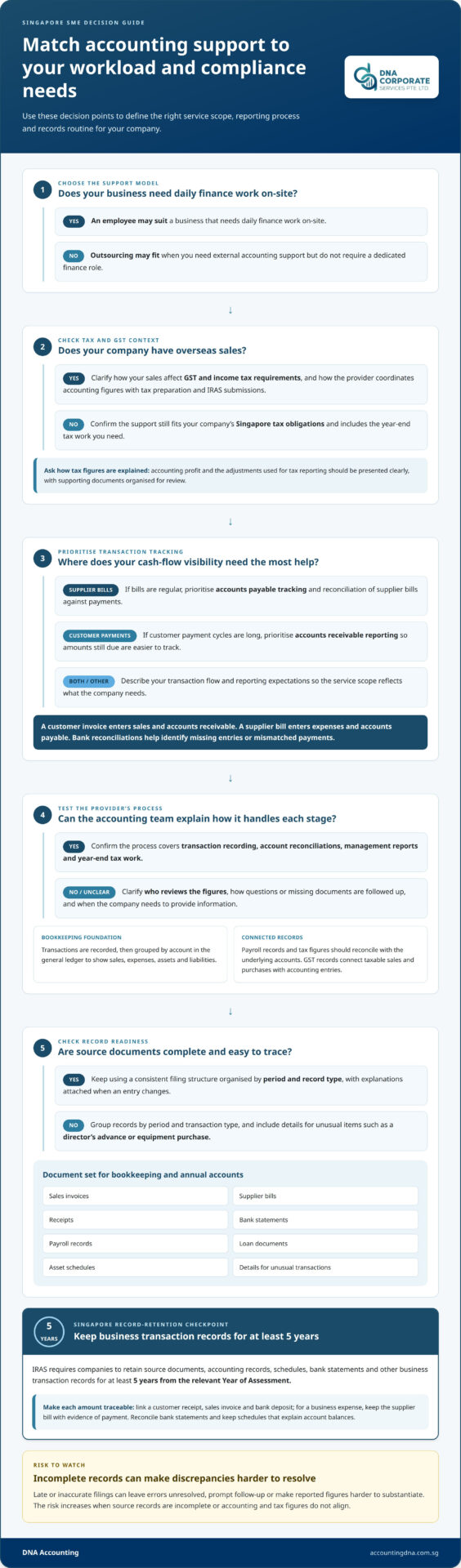
Bookkeeping records transactions, while the general ledger groups entries by account. For Singapore SMEs, this gives directors a clearer view of sales, expenses, assets and liabilities.
Accounting firms may also manage payroll, support CPF administration and prepare IRAS tax filings. Payroll records and tax figures should reconcile with the underlying accounts.
For example, a customer invoice enters sales and accounts receivable; a supplier bill enters expenses and accounts payable. Bank reconciliations then help identify missing entries or mismatched payments. A bookkeeping and accounting service can organise these records into usable financial reports.
GST and Statutory Record-Keeping
GST records connect a company’s taxable sales and purchases with its accounting entries. Clear transaction coding helps produce consistent GST records and supports financial reporting. According to Inland Revenue Authority of Singapore (IRAS), companies must retain source documents, accounting records, schedules, bank statements and other business transaction records for at least 5 years from the relevant Year of Assessment. Organised files make those records easier to retrieve.
Documents to provide to a Singapore accounting services provider for bookkeeping and annual accounts
Provide the documents needed to record transactions, reconcile accounts and prepare annual accounts: sales invoices, supplier bills, receipts, bank statements, payroll records, loan documents and asset schedules. Include details for unusual transactions, such as a director’s advance or an equipment purchase. Complete records help the accountant classify entries correctly and follow up on gaps before preparing reports. Group documents by period and transaction type so they are easier to process.
Choosing an accounting partner in Singapore
Choose accounting support that fits your transactions, reporting needs and tax obligations. A startup with overseas sales, for example, may have different GST and income tax requirements from a local consultancy.
Ask how the accountant records transactions, reconciles accounts, prepares management reports and handles year-end tax work. Clarify who reviews the figures and how the team follows up on questions or missing documents. A clear process helps directors know what information to provide and when.
Outsourced accounting gives a company access to accounting support without hiring an in-house accountant. An employee may suit a business that needs daily finance work on-site. Outsourcing may be a better fit when the company needs external support but does not require a dedicated finance role.
For Singapore corporate income tax, your accounting partner should explain how the accounts support the tax computation. Accounting profit and the adjustments used for tax reporting should be presented clearly, with supporting documents organised for review. Ask how the provider coordinates accounting figures with tax preparation and IRAS submissions.
Late or inaccurate filings can leave errors unresolved, prompt follow-up or make reported figures harder to substantiate. The risk increases when source records are incomplete or accounting and tax figures do not align. Ask how the accountant identifies discrepancies and flags items that need attention.
Before engaging accounting support, discuss your transaction flow, reporting expectations and tax requirements. A company with regular supplier bills may prioritise accounts payable tracking, while a business with long customer payment cycles may need closer receivables reporting. These details help define a practical service scope.
If you’re assessing what support fits your company, discuss your accounting requirements.
What are the Singapore statutory accounting and record-keeping requirements for companies?
Singapore companies need organised accounts and supporting records. Clear files help directors explain transactions and prepare accurate financial information. For example, each supplier payment should be traceable to its bill and bank entry.
According to Inland Revenue Authority of Singapore (IRAS), companies must retain source documents, accounting records, schedules, bank statements and other business transaction records for at least 5 years from the relevant Year of Assessment. This retention period makes a consistent filing system important.
Keep transactions traceable by linking each one to its supporting documents. A customer receipt, sales invoice and bank deposit should be identifiable as related entries. For a business expense, keep the supplier bill with evidence of payment. This makes it easier to explain how each amount was recorded.
Accounting records should also tell a coherent story. Reconcile bank statements with recorded receipts and payments, and keep schedules that explain account balances. An asset schedule, for example, can show how equipment purchases are reflected in the accounts. Keep business records separate from personal spending to reduce confusion during reviews.
Use a consistent filing structure organised by period and record type. Store invoices, bank statements, payroll records and schedules so you can retrieve them efficiently. If an entry changes, keep the explanation with the relevant record. A clear audit trail helps resolve questions without relying on memory or scattered correspondence.
For help maintaining Singapore company accounts and supporting records, discuss your bookkeeping requirements.
DNA Accounting
DNA Accounting supports Singapore businesses that need coordinated bookkeeping, tax records and company administration. Its services include accounting and bookkeeping, GST services, taxation services and corporate secretarial services.
A growing SME, for example, may need transaction records organised alongside GST reporting and tax preparation. A startup may need regular bookkeeping while keeping its corporate records in order. Defining these needs in a clear service scope helps directors understand which tasks are covered and what documents are required.
Consider professional support when financial records are falling behind, reporting needs are changing, or statutory responsibilities are taking time away from business operations. Contact DNA Accounting to discuss your company’s accounting needs.
Set Up Your Next Reporting Cycle with Confidence
Use your next reporting cycle to build a clearer connection between financial records and business decisions. Well-organised 新加坡会计服务 can help directors see which information is ready, where follow-up is needed and how finance tasks fit together. The right support should reflect your company’s operations, not make them more complicated.
DNA Accounting provides Accounting & Bookkeeping, GST Services and Taxation Services. These services help businesses connect accounting work with their GST and tax requirements as their needs evolve. Discuss your company’s current records, reporting priorities and the support that would make these responsibilities easier to manage.
Contact DNA Accounting to talk through your accounting needs and plan a clear path forward.
Frequently Asked Questions
What accounting services are available for businesses in Singapore?
Accounting support can extend beyond transaction bookkeeping to include management accounts, unaudited financial statements, fixed-asset registers and cash-flow statements. These give directors a clearer view of performance and balances, not just a record of past transactions. Payroll support can also cover payslips, CPF contributions and employee tax forms. The right scope depends on the company’s reporting needs and day-to-day finance workload.
How much do accounting and bookkeeping services cost in Singapore?
Fees depend on the scope of work and the company’s accounting needs. DNA Accounting describes its pricing as affordable and transparent, with no hidden costs. Before agreeing on a service scope, clarify which outputs you need, such as management accounts or bank reconciliations, and whether GST or tax work is included. This helps make the work clear without relying on a generic market estimate.
What are the annual filing deadlines and accounting obligations for Singapore companies?
IRAS requires companies to file Estimated Chargeable Income within three months after financial year-end, except where an administrative concession applies or filing is specifically not required. Singapore-incorporated companies must e-file annual income tax returns by 15 December each year. Companies should confirm their applicable annual-return filing obligations and plan accordingly. They must appoint a corporate secretary within 6 months of incorporation and hold an AGM within 6 months after year-end unless exempt.
When must a Singapore business register for GST, and how is GST accounting handled?
A Singapore business must register for GST when IRAS’s compulsory registration criteria apply. Voluntary registration is also subject to IRAS requirements, and the decision depends on the business’s circumstances and taxable activities. After registration, GST Services can support GST registration and return filing. Accounting support can also help establish the records and reporting process needed for the company’s GST obligations.
How can I choose a reliable accounting services provider in Singapore?
Look for relevant professional credentials and a clear process for reviewing work. DNA Accounting’s team includes Chartered Accountants, Certified Secretaries, Accredited Tax Practitioners and Certified Xero Advisors. Consider how the assigned professionals’ experience fits your needs, such as tax work or corporate administration. A defined review process and clear explanations also help directors understand the accounting decisions behind their reports.
Disclaimer
The information provided on this website is for general informational purposes only and is not intended to constitute professional accounting, tax, legal, or financial advice. While we strive to ensure that the content is accurate and up to date, regulations in Singapore, including those administered by ACRA, IRAS, CPF Board, and MOM, may change from time to time and may differ depending on individual circumstances.
Readers should not act or rely on any information contained on this website without seeking specific advice from a qualified professional based on their individual situation.
DNA Corporate Services and its affiliates accept no responsibility or liability for any loss or damage arising from reliance on the information provided in this website or any linked materials.
For tailored advice relating to accounting, taxation, corporate secretarial, or compliance matters in Singapore, please contact us directly for professional consultation.



