

Is the true cost to register a company in Singapore just the S$315 you pay to ACRA, or are you accidentally budgeting for a mountain of late filing penalties? We know it’s frustrating to scan a price list and still feel unsure about the total hit to your bank account. Most founders start with a simple number in mind, but they’re often blindsided by variable professional fees or the high price of nominee directors. It’s a stressful way to launch a business when you’d rather focus on your first big sale.
This guide provides a transparent breakdown of exactly what you’ll spend in your first year. We’ll explore mandatory government fees, professional service costs, and the hidden compliance expenses that catch startups off guard. You’ll learn how to navigate the BizFile process and leverage 2026 tax rebates to build a realistic, all-in budget. Our goal is to help you find a boutique partner who offers the bespoke care your startup deserves, ensuring your foundation is legally sound from day one.
Key Takeaways
- Learn why the mandatory S$315 ACRA fee is just the starting point and how your choice of Financial Year End (FYE) impacts long-term tax optimization.
- Identify the total cost to register a company in Singapore by comparing the hidden risks of DIY filing against the value of professional incorporation bundles.
- Avoid expensive ACRA late filing penalties by understanding your immediate post-incorporation duties, including maintaining statutory registers and managing your first BizFile.
- Discover how partnering with a boutique corporate secretary provides the bespoke, accessible support needed to navigate complex 2026 compliance requirements without the high costs of larger firms.
Mandatory ACRA Registration Fees and Structural Decisions
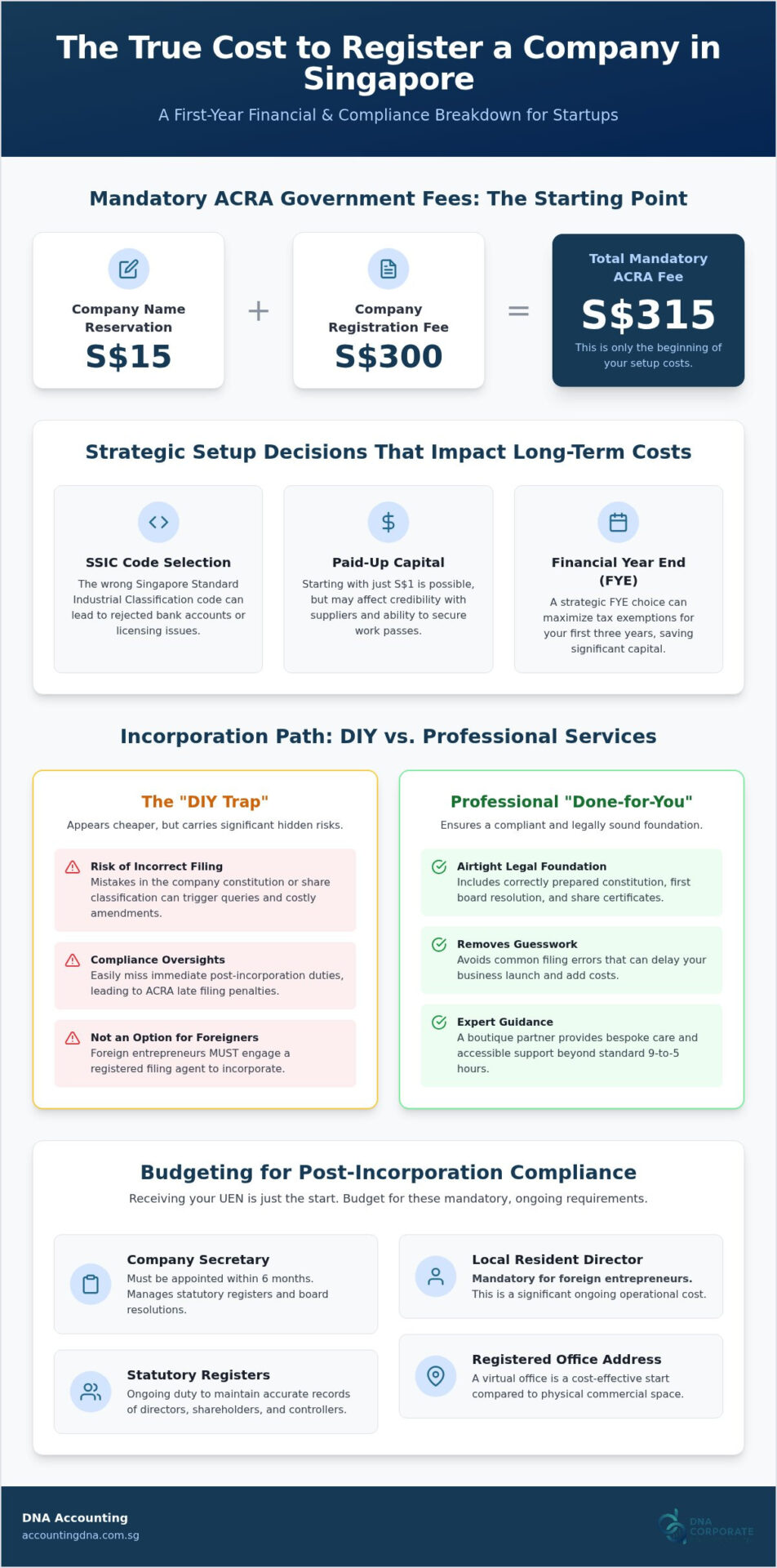
When calculating the initial cost to register a company in Singapore, your journey begins with the Accounting and Corporate Regulatory Authority (ACRA). The baseline government fees are transparent. You’ll pay S$15 to reserve your company name and S$300 for the actual entity registration through the BizFile+ portal. While these figures are fixed, the true cost to register a company in Singapore often hides in the structural decisions you make during this digital application.
Strategic Setup: Choosing the Right Structure for Your DNA
For most entrepreneurs, the Private Limited (Pte Ltd) structure is the most resilient choice for managing statutory compliance in Singapore. It offers limited liability protection and a professional image that scales with your ambition. Your structural setup also directly influences your eligibility for tax exemption schemes for new startups. Selecting an optimal Financial Year End (FYE) isn’t just an administrative task. It’s a strategic move to maximize your first three years of tax benefits, which can save your business significant capital during those critical early months.
Comparing DIY vs. Professional Incorporation Service Costs
Many founders are tempted by the S$315 DIY route to lower the initial cost to register a company in Singapore. While the official ACRA website makes the transaction look simple, the “DIY Trap” is real. Filing an incorrect company constitution or misclassifying share types often triggers expensive queries or necessitates costly amendments later. Professional bundles remove this guesswork. A typical “Done-for-You” package includes your constitution, first board resolution, and share certificates, ensuring your legal foundation is airtight from the start.
For foreign entrepreneurs, professional help is mandatory. You can’t register a company yourself; you must engage a registered filing agent. You also need a local resident director. Budgeting for a nominee director is a significant factor in your total cost to register a company in Singapore. Beyond registration, evaluating accounting services Singapore early on helps you manage your books and avoid the stress of year-end tax rushes.
The Value of a Boutique Corporate Secretary
Every Singapore company must appoint a qualified Company Secretary within six months of incorporation. This isn’t just a box-ticking exercise. It’s a vital role that manages your statutory registers and board resolutions. When comparing the cost of corporate secretarial services in Singapore, look for bespoke care rather than just the lowest price. At DNA Accounting, we understand that founders don’t just work 9-to-5. Our boutique approach means we’re often available during evenings and weekends to answer your urgent compliance questions. If you’re feeling overwhelmed by the paperwork, let’s chat about a customized support plan for your new venture.
Budgeting for Post-Incorporation Compliance and Statutory Duties
Receiving your Unique Entity Number (UEN) is an exciting milestone, but it’s just the beginning of your compliance journey. Your Business Profile, often called the BizFile, is the first essential document you’ll handle. It’s an electronic extract that serves as your company’s birth certificate. You’ll need it immediately to open corporate bank accounts or sign office leases. While the initial ACRA registration fees are a one-time expense, keeping your statutory registers updated is a mandatory, ongoing task. You’re required to maintain accurate records of directors, shareholders, and registrable controllers at your registered office.
Your First 90 Days: A Compliance Roadmap
The first three months are a critical window for your startup’s health. If you expect your taxable turnover to exceed S$1 million, you’ll need to register for GST. This move adds a layer of complexity to your corporate tax filing services, so it’s best to plan your accounting workflow early. Opening a bank account also involves documentation fees and varying minimum balance requirements across different local and international banks. Don’t let these tasks pile up. Consulting with a specialist can help you avoid the ACRA late filing penalties that plague 30% of new startups. Ensuring you’ve factored in every compliance duty is the only way to accurately track the cost to register a company in Singapore.
Launching Your Singapore Venture with Confidence
Launching a business is a major milestone, but success depends on a foundation that looks beyond the initial S$315 ACRA fee. You now understand that the true cost to register a company in Singapore involves strategic choices like your Financial Year End and maintaining mandatory statutory registers. Avoiding the high risk of late filing penalties starts with getting your BizFile and Corppass right from day one.
At DNA Accounting, we’ve been the trusted partner for Singapore SMEs since 2016. As a boutique firm, we provide the bespoke care your startup needs; we even offer availability during evenings and weekends to suit your busy schedule. Get a personalized incorporation quote and expert advisory from DNA Accounting today. We’re here to help you turn your entrepreneurial vision into a compliant, thriving reality.
Frequently Asked Questions
Can a foreigner register a Singapore company for just the ACRA fee of S$315?
No, foreigners can’t register a company for just the S$315 ACRA fee. Singapore law requires foreign entrepreneurs to engage a registered filing agent to submit their application. You also must appoint at least one director who is ordinarily resident in Singapore. These requirements mean your total cost to register a company in Singapore will include professional service and nominee director fees.
What is the minimum paid-up capital required to incorporate in 2026?
The minimum paid-up capital required to incorporate a company in Singapore is S$1. While this low entry point is attractive for new startups, many founders choose a higher amount to improve their corporate credibility. A higher capital is often necessary when you’re applying for specific business licenses, work passes, or corporate bank accounts that require a more substantial financial standing.
Is it cheaper to hire a firm for incorporation or do it myself via BizFile+?
The DIY path through BizFile+ is cheaper upfront, but it often leads to hidden costs later. Incorrectly filing your company constitution or SSIC codes can result in expensive ACRA amendment fees or rejected bank applications. Hiring a professional firm ensures your setup is compliant from the start, saving you the stress and expense of fixing avoidable administrative mistakes during your first year.
What are the annual recurring costs of maintaining a Singapore company?
Beyond the initial cost to register a company in Singapore, you should budget for annual recurring expenses. These include the S$60 ACRA annual return filing fee and professional fees for your mandatory Company Secretary. You’ll also need to account for annual tax filings with IRAS and bookkeeping services to ensure your financial records meet statutory requirements every year.
Do I need a physical office address to register my business in Singapore?
Yes, every Singapore company must have a registered office address located within the country. However, this doesn’t have to be a physical commercial space that you rent exclusively. Many startups use a virtual office address service instead. It’s a cost-effective way to meet ACRA requirements while keeping your overheads low during the early stages of your business growth.
How much does a nominee director service typically cost for foreign founders?
Nominee director fees vary based on the level of risk and the specific requirements of your business structure. Since foreign founders must have a local resident director, this service is a vital part of your first-year budget. It’s best to consult with a boutique firm to get a clear quote that reflects your company’s unique needs and compliance profile.
Disclaimer
The information provided on this website is for general informational purposes only and is not intended to constitute professional accounting, tax, legal, or financial advice. While we strive to ensure that the content is accurate and up to date, regulations in Singapore, including those administered by ACRA, IRAS, CPF Board, and MOM, may change from time to time and may differ depending on individual circumstances.
Readers should not act or rely on any information contained on this website without seeking specific advice from a qualified professional based on their individual situation.
DNA Corporate Services and its affiliates accept no responsibility or liability for any loss or damage arising from reliance on the information provided in this website or any linked materials.
For tailored advice relating to accounting, taxation, corporate secretarial, or compliance matters in Singapore, please contact us directly for professional consultation.



