

What if the most important incorporation decisions happen before you file with ACRA? If you’re working out how to incorporate a company in Singapore, it’s natural to focus on the registration form, but preparation matters too. Your company structure, proposed name, directors, shareholders and registered office details all need attention before submission.
This practical 2026 guide explains the Singapore incorporation process and the information to prepare, so you can make informed setup decisions and reduce avoidable filing errors. Registration is only the beginning: ACRA filings, IRAS tax matters and, if you employ staff, CPF responsibilities become part of running the business. By planning for setup and ongoing administration together, you can give your company a clearer start.
Key Takeaways
- Before deciding how to incorporate a company in Singapore, consider whether a company structure fits your business and how ownership, directors, share capital, constitution and financial year-end affect the setup.
- Prepare the company details and information needed for the ACRA Bizfile submission. Check current guidance on name availability and filing requirements.
- ACRA registration approval is the start of company administration, not the finish. Organise your records and statutory processes early.
- Plan accounting and tax administration around your company’s activities, and identify which compliance duties and deadlines apply to your circumstances.
Before you incorporate a company in Singapore: decide what you are setting up
Registering a business in Singapore isn’t always the same as incorporating a company. A sole proprietorship or partnership is a different business structure; a company is a separate legal entity. That distinction is a useful starting point for company incorporation, because the structure affects how ownership and management are arranged.
Which company setup decisions should founders settle first?
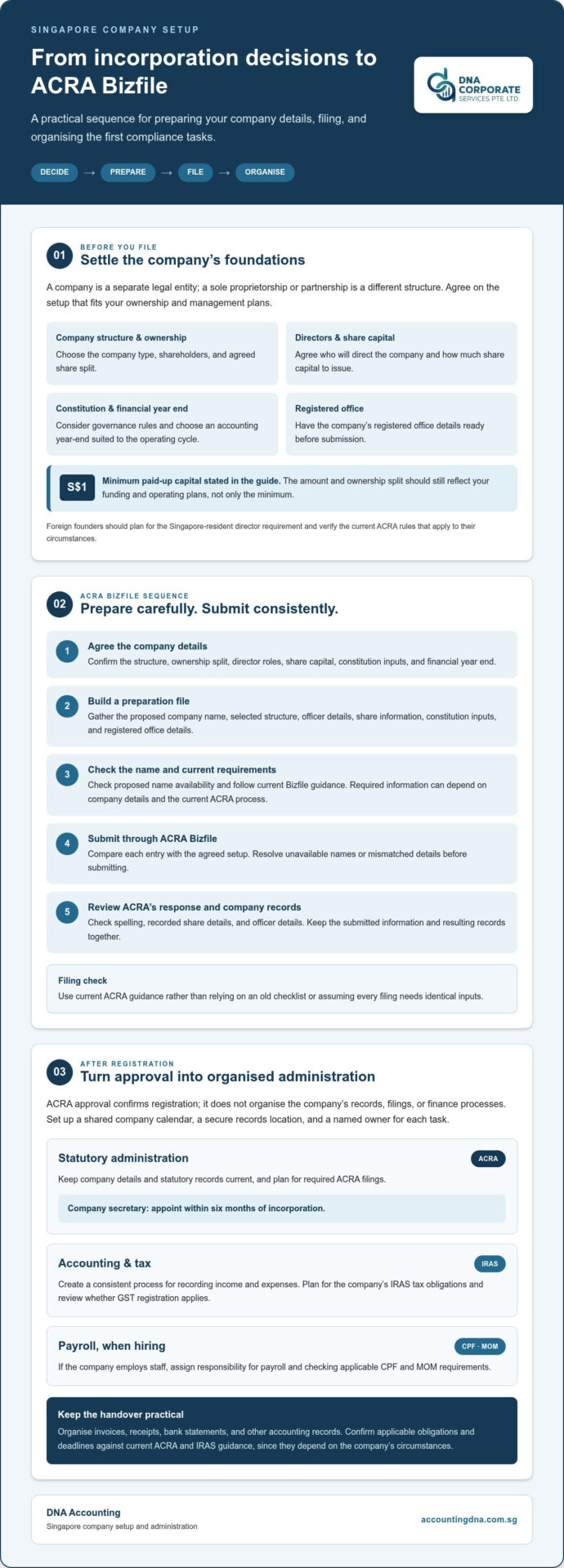
Before you learn how to incorporate a company in Singapore, map the setup choices to your business plans. Decide the company type and who will own shares. Agree on the ownership split, who will direct the company and how much share capital to issue. The current minimum paid-up capital is S$1, but the amount and ownership split should reflect your funding and operating plans, not just the minimum.
The constitution sets out rules for the company’s governance and administration. Review the relevant ACRA guidance for current requirements and filing details. You’ll also need to choose a financial year end (FYE), the date that closes the company’s accounting year. It shapes record-keeping and planning for accounts and tax, so consider your operating cycle when choosing one.
For a fuller overview of the decisions founders face, see this Singapore company incorporation guide.
How to incorporate a company in Singapore through ACRA Bizfile
Once you’ve settled the key setup choices, manage the filing as a sequence rather than a form-filling exercise. Settle the company details, prepare the required information, submit through ACRA Bizfile, then review ACRA’s outcome and the company details recorded.
What information should you prepare before submitting through Bizfile?
Before starting, organise the proposed company name, selected structure, officer details, share information and inputs for the constitution. Have the registered office details ready too. Use this preparation file to check that the names, roles and ownership information are consistent before entering them in Bizfile.
Check the proposed name’s availability and follow the current Bizfile guidance for required information and supporting requirements. The application steps can depend on the company’s details and the current ACRA process, so don’t rely on an old checklist or assume every filing needs identical inputs. If a name is unavailable or an entry doesn’t match the agreed setup, resolve the discrepancy before submitting.
As you work through Bizfile, compare each entry with the decisions made before filing. After submission, review ACRA’s response and the company information carefully, including the spelling of names and the recorded share and officer details. Keep the submitted information and resulting records together for future administration.
Incorporation is also the time to organise how statutory records and filings will be maintained. Company secretary and statutory support can connect the incorporation details with ongoing company administration. DNA Accounting supports company incorporation and corporate secretarial administration. To discuss coordinating the filing and record-keeping, discuss your incorporation requirements.
After incorporation: organise your Singapore company’s first compliance steps
ACRA approval confirms that the company has been registered. It doesn’t organise the records, filings or finance processes needed to run it. A clear handover helps directors see what needs attention and who is responsible, instead of relying on memory as the business gets busy.
How can founders keep the transition from registration to operations manageable?
Start with a shared company calendar and a secure place for key records. Assign responsibility for maintaining statutory information, tracking ACRA filing requirements and organising invoices, receipts, bank statements and other accounting records. Confirm applicable obligations and deadlines against current ACRA and IRAS guidance, since they depend on the company’s circumstances.
Make the first tasks specific:
- Statutory administration: Keep company details and records current, and plan for required ACRA filings. A company secretary must be appointed within six months of incorporation.
- Accounting and tax: Set up a consistent process for recording income and expenses, then plan for the company’s IRAS tax obligations. Review whether GST registration applies to the business.
- Payroll: If the company hires employees, assign responsibility for payroll and checking applicable CPF and MOM requirements.
For example, if a new business starts trading and hires staff soon after registration, its founders will need to coordinate transaction records, tax planning and payroll administration alongside customer work. Assign an owner to each task and note when it needs attention to make the workload easier to manage.
DNA Accounting supports founders with company incorporation, ACRA compliance and corporate secretarial duties, including statutory filings. Coordinating setup with ongoing administration can help reduce the risk of important records or filing responsibilities being overlooked. To discuss the next steps for your business, discuss your Singapore company setup.
Turn your incorporation plans into a confident launch
Knowing how to incorporate a company in Singapore gives you a starting point. Turn your business plan into practical priorities: identify the first customers you want to serve, decide what you need to learn from them, and set milestones to track progress. A clear launch plan keeps early decisions connected to the business you’re building.
You don’t need every detail of the company’s future mapped out before you begin. Focus on the decisions in front of you, then revisit your plans as you learn more about the market and your operations.
Ready to take the next step? Discuss your Singapore company incorporation with our team and move forward with a clearer plan for your launch.
Frequently Asked Questions
How long does it take to incorporate a company in Singapore?
The timeline for how to incorporate a company in Singapore varies with the name application, ACRA processing and any application-specific follow-up. Don’t plan around a guaranteed turnaround. Check the current Bizfile process before setting a launch date, prepare company details and supporting information early, and allow time to respond if ACRA requests clarification. Keep operational commitments flexible until you know the registration outcome.
Can a foreigner incorporate a company in Singapore without relocating?
A foreign founder may be able to incorporate without relocating, but company officer requirements and permission to live or work in Singapore are separate matters. The right arrangement depends on the founder’s circumstances and current rules. Check applicable ACRA requirements and guidance from relevant Singapore authorities before making plans. Incorporation by itself shouldn’t be treated as a visa or work authorisation.
How much does it cost to incorporate a company in Singapore?
The total depends on official filing charges and the professional support involved, which can vary with the setup and services required. For a useful budget, separate ACRA charges from service fees, then check current official charges through ACRA’s guidance. Discuss your incorporation and administration requirements with DNA Accounting to understand the support involved, rather than relying on a general market estimate or assuming one fixed service fee applies.
Can I incorporate a Singapore company myself through Bizfile?
Bizfile is ACRA’s online channel for company transactions, but whether you can complete a particular filing yourself depends on your access and the company’s circumstances. Follow the current instructions and check that names, officer information and share details match your agreed setup before submitting. If you’d rather coordinate the filing and subsequent secretarial administration with support, DNA Accounting can help manage those tasks.
Disclaimer
The information provided on this website is for general informational purposes only and is not intended to constitute professional accounting, tax, legal, or financial advice. While we strive to ensure that the content is accurate and up to date, regulations in Singapore, including those administered by ACRA, IRAS, CPF Board, and MOM, may change from time to time and may differ depending on individual circumstances.
Readers should not act or rely on any information contained on this website without seeking specific advice from a qualified professional based on their individual situation.
DNA Corporate Services and its affiliates accept no responsibility or liability for any loss or damage arising from reliance on the information provided in this website or any linked materials.
For tailored advice relating to accounting, taxation, corporate secretarial, or compliance matters in Singapore, please contact us directly for professional consultation.



