

Did you know that a simple oversight in your annual return filing can lead to an immediate S$600 penalty from ACRA? For a founder, that isn’t just a fine; it’s a distraction from the vision you’re trying to build. We understand that the pressure to maintain perfect records while scaling a business in Singapore can feel overwhelming. You want to focus on your product-market fit, yet you’re often stuck debating the merits of cash versus accrual accounting or manually entering data into spreadsheets. Choosing the right bookkeeping services for startups is about more than just staying organized. It’s about building a protective shield around your company’s financial future.
We agree that your time is your most valuable asset, and it shouldn’t be consumed by the complexities of GST registration thresholds or the 2026 InvoiceNow mandates. This guide shows you how to establish a scalable, compliance-ready bookkeeping system that keeps you audit-ready without the midnight stress. We’ll walk you through the essential steps to streamline your financial operations, ensuring you’re fully prepared for IRAS tax season while keeping your eyes firmly on growth.
Key Takeaways
- Understand how to move beyond basic record-keeping to build a financial foundation that meets strict ACRA and IRAS compliance standards.
- Learn the essential five-step process for setting up your finances, starting with dedicated Singapore corporate bank accounts and cloud-based accounting platforms.
- Identify the “Founder Burnout” threshold to determine exactly when engaging professional bookkeeping services for startups becomes more cost-effective than DIY methods.
- Discover the advantages of boutique accounting partners in providing the personalized, scalable support necessary for a startup’s growth journey.
Why Startups in Singapore Need Specialized Bookkeeping Services
Why wait until an audit to realize your financial records are a mess? Startup bookkeeping isn’t just about tracking cash; it’s the systematic recording of every financial transaction to satisfy the Accounting and Corporate Regulatory Authority (ACRA) and the Inland Revenue Authority of Singapore (IRAS). While some founders rely on standard methods of bookkeeping, the unique pace of a new venture requires a more robust approach than simple “shoebox accounting.” Tossing receipts into a folder and hoping for the best at year-end fails because it lacks the real-time oversight needed for GST thresholds or CPF contributions.
In Singapore, the regulatory environment is unforgiving. Choosing specialized bookkeeping services for startups shifts your focus from reactive record-keeping to a “compliance-first” model. This ensures your foundation is solid before you even think about scaling. Investing in professional bookkeeping services for startups early on prevents costly pitfalls and ensures you’re always ready for the next growth phase.
The High Cost of Poor Compliance in Singapore
ACRA doesn’t take late filings lightly. As of 2026, missing your Annual Return deadline triggers an immediate S$300 penalty, which doubles to S$600 if you’re more than three months late. Repeated failures can even lead to director disqualification. Beyond ACRA, IRAS requires you to maintain proper records for at least seven years. We’ve seen how easily these dates slip by when you’re busy with product development. Understanding statutory compliance in Singapore is non-negotiable for any founder who wants to stay in business long-term.
Bookkeeping as an Investor Readiness Tool
Are your books ready for a Series A? When venture capitalists or banks perform due diligence, they look for organized ledgers, not messy spreadsheets. Clean books speed up the funding process and demonstrate professional management. Accurate management accounts also allow you to make data-driven pivot decisions. You can’t know if your burn rate is sustainable if your data is three months behind. Organized financials don’t just keep you out of trouble; they prove to the market that your startup is a serious, well-managed entity.
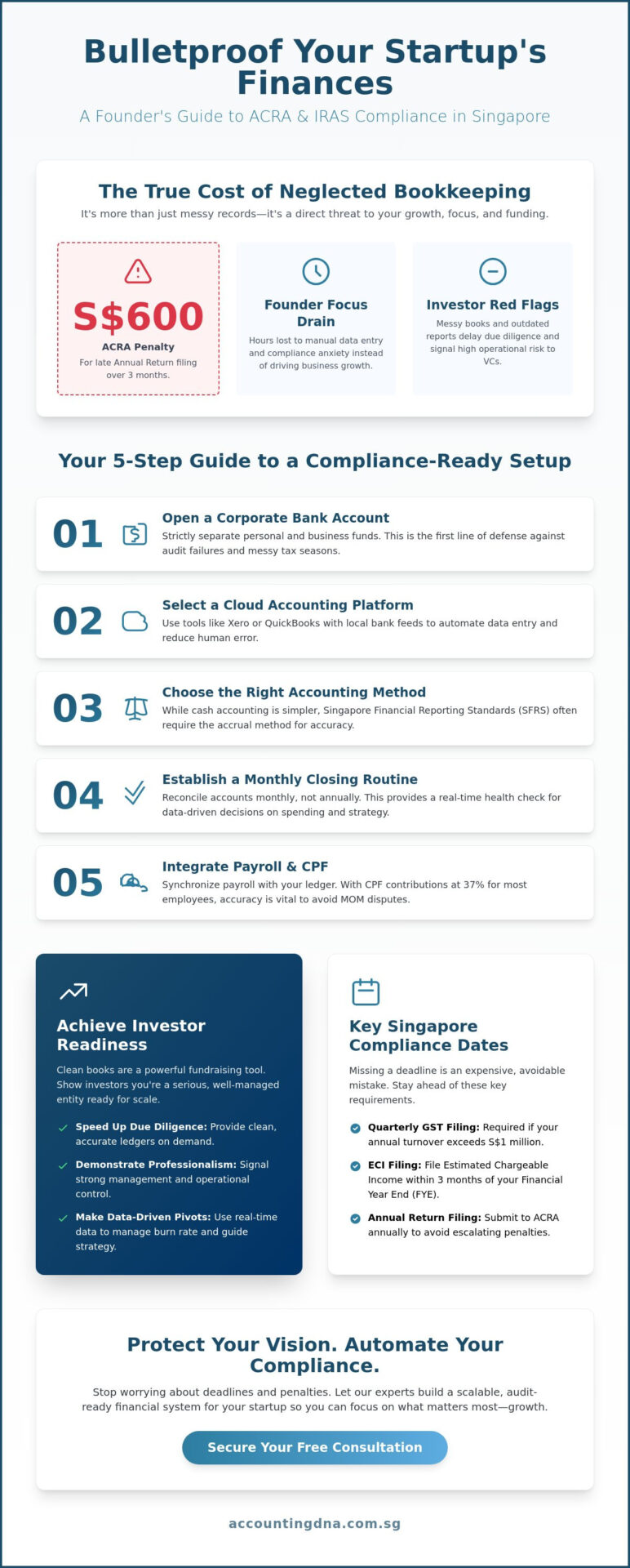
How to Set Up Your Startup’s Bookkeeping: A 5-Step Singapore Guide
Setting up your financial infrastructure correctly from day one saves you hundreds of hours later. After Registering your business, you must establish a clear boundary between personal and company assets. This starts with opening a Singapore corporate bank account. Mixing funds is a primary cause of audit failures and makes tax season a nightmare. Next, you’ll need to select a cloud accounting platform. We recommend tools optimized for the local market to ensure seamless bank feeds and automated compliance.
Choosing Your Cloud Accounting Stack
Deciding between Xero vs. QuickBooks often comes down to your specific transaction volume and preferred user interface. Both platforms support local bank feeds, which drastically reduces manual entry. To further streamline your workflow, use automated receipt scanning tools like Dext. These integrations ensure that your bookkeeping services for startups are as efficient as possible, capturing data the moment a purchase is made.
Establishing a Singapore Compliance Calendar
Missing a deadline is an expensive mistake. Your calendar must include quarterly GST filings if you’ve crossed the S$1 million turnover threshold. You also need to file your Estimated Chargeable Income (ECI) within three months of your Financial Year End (FYE). Staying ahead of corporate tax filing Singapore requirements prevents last-minute panics. If you’re feeling overwhelmed by these dates, it might be time to speak with a consultant who can manage these milestones for you.
Scaling Your Finance Function: When to Outsource Startup Bookkeeping
Choosing professional bookkeeping services for startups provides more than just data entry. It gives you access to specialists who understand the intricacies of GST registration and MOM-compliant payroll. You don’t just need a software subscription; you need an advisor who knows how a local startup scales. Having a partner who can flag potential compliance risks before they trigger ACRA penalties is the difference between a business that survives and one that thrives.
The Boutique Advantage: Personalized Care vs. High-Volume Firms
At DNA Accounting, we believe in bespoke care that fits your unique schedule. We aren’t a distant service provider; we’re a protective partner available during evenings and non-working days to ensure your peace of mind. By centralizing your accounting, corporate secretarial, and tax needs, we eliminate the administrative friction that slows you down. This integrated model means you have one point of contact who understands your entire corporate history, from incorporation to your first GST filing.
Evaluating Bookkeeping Fees and ROI
You shouldn’t view accounting as a sunk cost. To get the best value, you’ll want to review a comprehensive guide on bookkeeping fees in Singapore to see how different service levels impact your bottom line. The ROI of outsourcing is the reclaimed hours a founder spends on revenue-generating tasks. Instead of wrestling with spreadsheets, you’re free to focus on achieving product-market fit while we ensure your books remain audit-ready and compliant.
Building a Scalable Foundation for Your Singapore Startup
Since 2016, we’ve specialized in helping Singapore startups navigate the complexities of ACRA and IRAS requirements. We understand that entrepreneurship doesn’t stick to a 9-to-5 schedule; that’s why we’re available during evenings and non-working days to support your growth. Our team provides the bespoke care and technical expertise you need to stay audit-ready from day one. We pride ourselves on being a protective partner that grows alongside your business.
Ready to streamline your finances? Get a Personalized Quote for Your Startup’s Bookkeeping Needs and take the first step toward a stress-free compliance journey. We’re here to help you build something great, one balanced ledger at a time.
Frequently Asked Questions
Is bookkeeping mandatory for startups in Singapore?
Yes, maintaining accurate financial records is a statutory requirement under Section 199 of the Singapore Companies Act. ACRA and IRAS require every company to keep accounts that sufficiently explain its transactions and financial position. Failing to keep these records for at least five years can lead to significant penalties. Beyond legal compliance, organized books are vital for preparing the financial statements required for your annual general meeting and tax filings.
What is the difference between bookkeeping and accounting for a new business?
Bookkeeping focuses on the administrative recording of daily financial transactions, whereas accounting involves the analysis and reporting of that data. For a new business, bookkeeping ensures every receipt is captured and categorized correctly. Accounting then uses those records to prepare audit-ready statements and navigate Singapore Financial Reporting Standards. While bookkeeping keeps your data organized, accounting provides the strategic insights you need to manage your startup’s tax obligations and cash flow.
How much do bookkeeping services for startups typically cost in Singapore?
The pricing for bookkeeping services for startups in Singapore typically depends on your monthly transaction volume and whether you require additional services like GST filing or payroll. While basic digital solutions exist, many startups prefer boutique firms that offer personalized support and a centralized service model. This approach ensures your financial foundation is robust from day one. Investing in professional support often pays for itself by preventing late filing penalties and identifying tax-saving opportunities.
Can I do my own bookkeeping using Xero or QuickBooks?
Yes, founders can use cloud-based tools like Xero to manage their own books, but this often leads to a “founder burnout” threshold. While these platforms automate many tasks, they still require a solid understanding of Singapore’s accounting principles to avoid errors. Professional bookkeeping services for startups provide an extra layer of security, ensuring your bank feeds are reconciled correctly and your records remain compliant with the latest IRAS regulations, saving you valuable time.
When should a startup register for GST in Singapore?
You are legally required to register for GST if your taxable turnover exceeds S$1 million at the end of any calendar year. You can also register voluntarily if it benefits your business structure, such as when you have significant input tax to claim back. It’s important to note that from April 2026, any business that registers for GST voluntarily must use an InvoiceNow-ready system to facilitate seamless digital invoicing and compliance.
Disclaimer
The information provided on this website is for general informational purposes only and is not intended to constitute professional accounting, tax, legal, or financial advice. While we strive to ensure that the content is accurate and up to date, regulations in Singapore, including those administered by ACRA, IRAS, CPF Board, and MOM, may change from time to time and may differ depending on individual circumstances.
Readers should not act or rely on any information contained on this website without seeking specific advice from a qualified professional based on their individual situation.
DNA Corporate Services and its affiliates accept no responsibility or liability for any loss or damage arising from reliance on the information provided in this website or any linked materials.
For tailored advice relating to accounting, taxation, corporate secretarial, or compliance matters in Singapore, please contact us directly for professional consultation.



